
The nights in the Tri-Cities are already cooling down. If your rig has been running all summer, you have probably noticed it too: mornings that feel different, evenings that arrive earlier, and that familiar pull to squeeze in one more trip before the season turns.
That pull is worth listening to. But so is the checklist sitting in the back of your mind.
Fall RV maintenance is not about shutting everything down and walking away. It is about protecting what you have invested in, so the rig is ready when you need it, whether that means a late-October run to Walla Walla, a southbound snowbird departure, or a clean storage setup that does not cost you a repair bill in March.
The tasks below are organized by system. Some you can handle yourself in an afternoon. Others are worth handing off to a technician, and this guide will tell you which is which.
Why Fall Is the Right Window for RV Maintenance
The first hard freeze is not a gradual event. One night it is 38 degrees, and the next morning a water line has split.
Water left in lines, tanks, or the water heater expands when it freezes. That expansion cracks pipes, damages fittings, and can ruin a water heater in a single night. Roof sealants and slide seals that are already cracked or lifting do not improve in cold weather. They fail faster, and the water damage that follows is expensive.
If your rig is already winterized and stored, this article is less urgent.
Roof and Exterior Seals
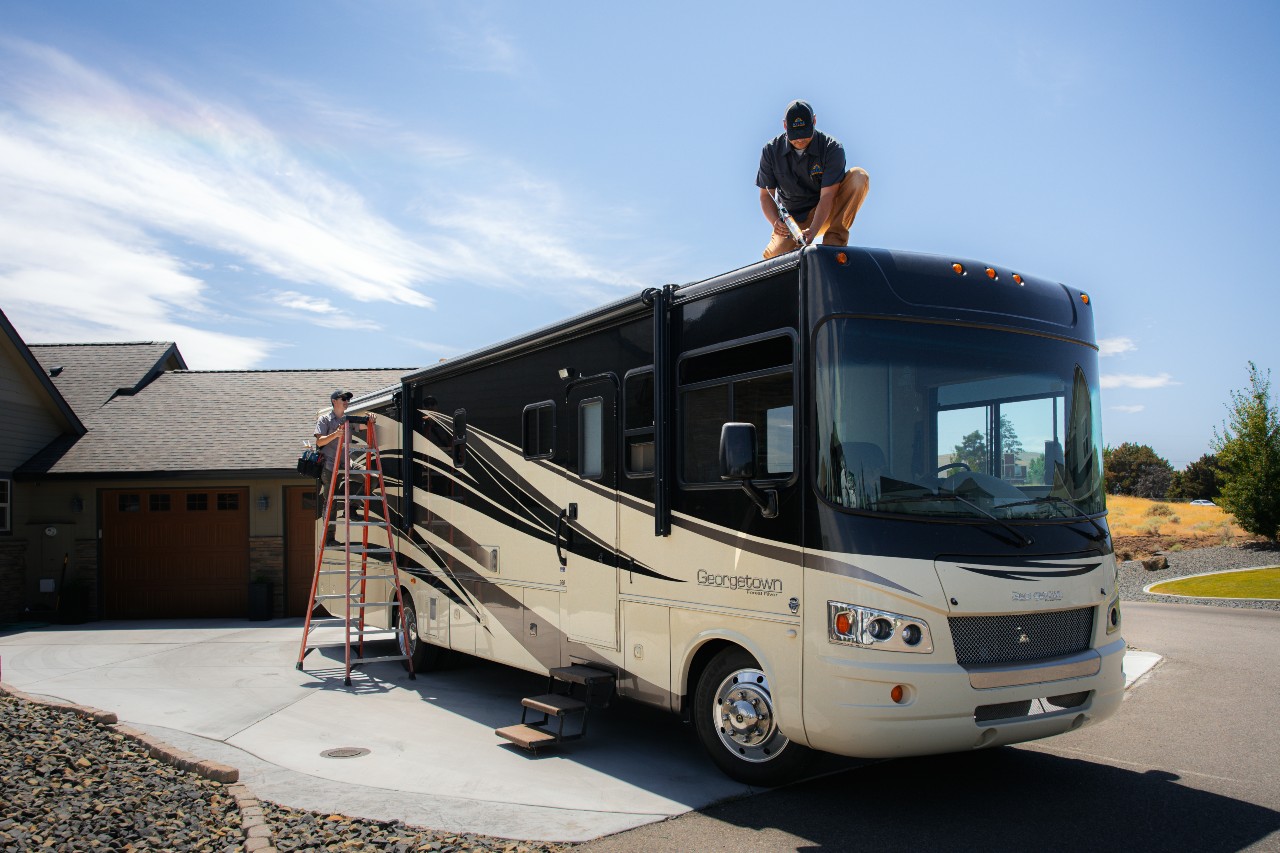
Start at the top. Walk the perimeter and look for cracks or gaps around vents, skylights, and AC units. Check window seals for lifting or wear. Press gently on the roof surface near seams and vents. Any soft spot is a sign that moisture has already found a way in.
Temperature swings in October accelerate sealant wear. A seal that held through summer may not hold through a Washington winter. Use RV-approved sealant when you find a gap, and note that not all sealants are compatible with all roof materials. Check your rig’s documentation before applying anything.
A visual check from the ground misses most of what matters. Getting on the roof, or having a technician do it, is the only way to catch the gaps that cause real damage. Atlas Mobile RV Service performs roof inspections and reseals on-site, at your driveway, campsite, or storage location.
Plumbing and Winterization
One missed step here can mean cracked pipes after the first hard freeze. The core process: drain all lines including outdoor showers, drain the water heater and holding tanks, add RV-safe antifreeze per your rig’s specifications, and verify that bypass valves are correctly set.
Owners who have done this before and know their rig’s bypass configuration can handle it. First-timers, or anyone with a complex plumbing layout, benefit from having a technician walk through it. Antifreeze type and bypass valve placement vary by model. What works on one rig does not always apply to another.
Battery Care

Cold saps battery capacity fast. Before temperatures drop, clean any corrosion from battery terminals using a water-and-baking-soda solution. Test voltage on both 12-volt and 6-volt batteries. Top off distilled water in lead-acid batteries. If the rig will sit for months, connect a smart charger or battery maintainer.
Batteries left unchecked through winter are often dead by spring. A battery that tests marginal now will not improve in storage. Replacing a borderline battery in October is considerably less expensive than a service call in March when you are trying to leave for a trip.
Slide-Outs, Seals, and Moving Parts
Inspect slide seals for cracks or signs of rot. Tight seals keep heat in and moisture out. Lubricate slide mechanisms with RV-specific products. Household lubricants attract dirt and can cause more problems than they solve.
The same logic applies to hinges, stabilizer jacks, awning arms, and bay doors. Moving parts that are stiff in fall tend to fail in winter. A slide that is already slow to retract may have a mechanical issue beyond lubrication. That is a diagnostic call, not a DIY fix.
Tires
Check PSI and inflate to your rig’s specification. Temperature drops affect pressure, and underinflated tires sitting for months are more prone to deformation. A flat spot happens when a tire sits in one position for too long under load, and in severe cases that deformation becomes permanent.
Inspect sidewalls for dry rot and cracks. Check tread depth. A tire that looks fine visually can still be past its service life. Most manufacturers recommend replacement every 6 to 10 years, depending on use and storage conditions. Age matters as much as appearance.
Furnace and Heating System
Test the furnace before frost warnings arrive, not after. Fire it up, let it run a full cycle, and walk through the rig to check airflow at the registers. Clean or replace the return air filter.
During the test cycle, listen carefully. Grinding, squealing, rattling, booming, or a burner that seems to start and stop repeatedly are warning signs that require a technician, not a filter swap. If you detect a propane smell during or after startup, do not operate switches, start the engine or generator, or try to locate the leak yourself. Shut off the propane supply from outside, ventilate the coach, and call a qualified technician from a safe location.
A cracked burn chamber in a furnace can allow CO gas into the living space of an RV, which is why seasonal inspection of the burn chamber is recommended. This is not a visual check an owner can perform from the outside. It requires a technician.
Skip the 34-Day Wait: How Atlas Fits Into Your Fall Prep
The two things that keep most RV owners from completing fall maintenance on time are the dealership waitlist and the hassle of towing. Dealerships average 34 days for RV service. That is 34 days your rig sits idle while the season moves on without you.
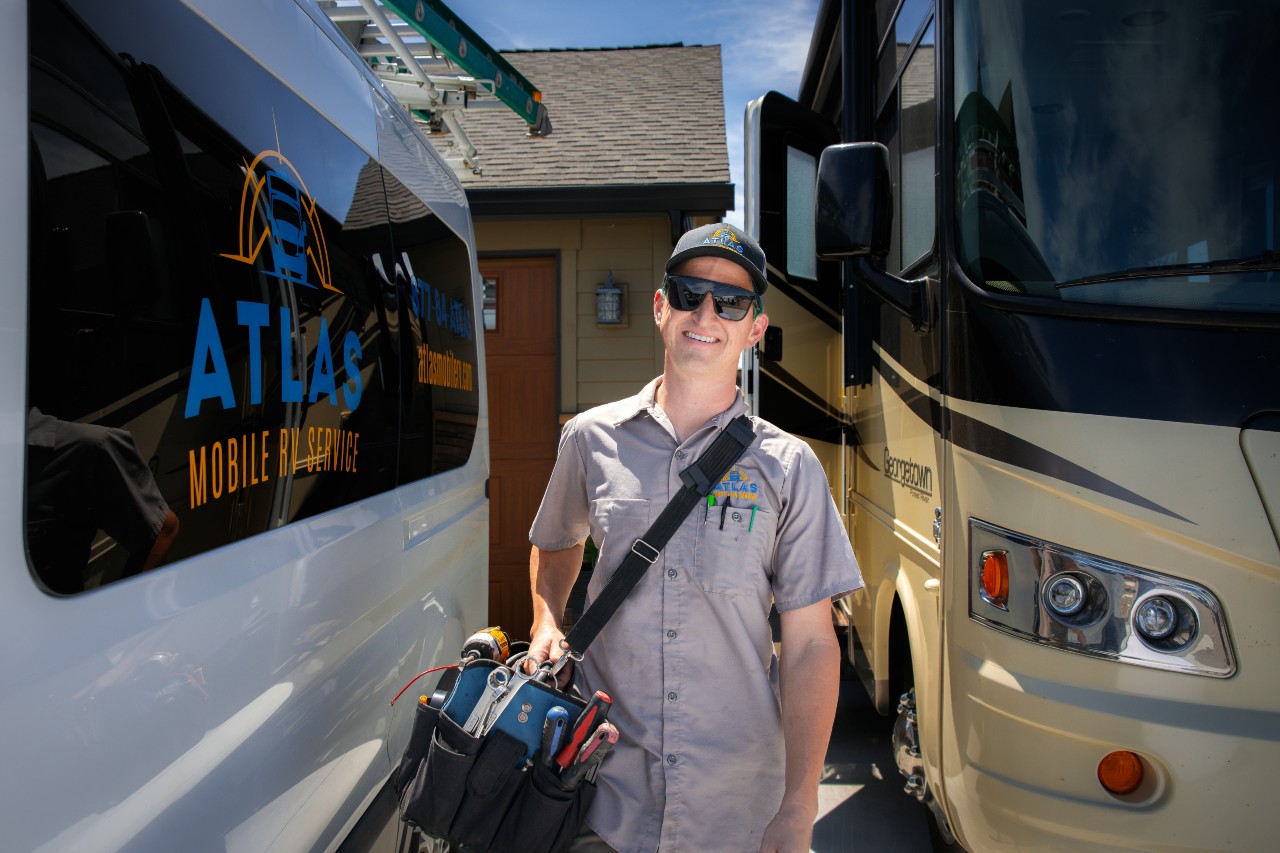
Atlas Mobile RV Service removes both friction points. Our technicians come directly to your campsite, driveway, or storage location. Most fall maintenance tasks, including roof inspections, winterization, battery checks, and furnace diagnostics, are handled on-site in a single visit. No towing. No waitlist. No rearranging your schedule around a shop’s availability.
The Cost of Waiting Is Real
The window for fall RV maintenance in the Tri-Cities, Yakima, and Walla Walla is shorter than it feels. First frosts in this region can arrive as early as October, and technicians across the area book up fast in late September and early October.
The rig that goes into winter with a compromised roof seal, an untested furnace, or water left in the lines is the rig that needs expensive repairs in spring. A few hours of attention now protects the investment and keeps late-season travel on the table.
Book your fall RV maintenance service with Atlas Mobile RV Service today. We come to you.